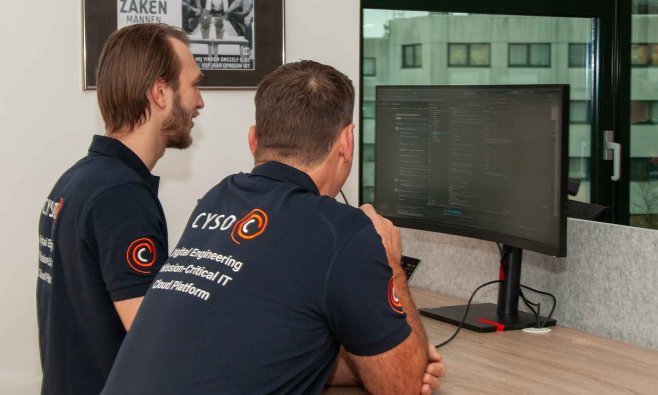
Jelmer, our Tech Lead, is now a Kubestronaut
By Alec on
Last updated on
A Kubestronaut is someone who has passed all five Kubernetes certifications from the Cloud Native Computing Foundation (CNCF) and keeps them valid. Jelmer, our Tech Lead, now holds the title.

What is a Kubestronaut?
CNCF offers several certifications. Kubestronaut is its title for people who have passed the five Kubernetes ones.
The title lasts only as long as the certifications do: CNCF counts it only while all five are unexpired.
As of 13 November 2026, CNCF's public directory lists 4,729 Kubestronauts worldwide. It lists just 220 in the Netherlands.
Which five Kubernetes certifications count?
There's no separate exam for the title. You earn it by passing each Kubernetes certification on this list:
CKA: Certified Kubernetes Administrator
CKAD: Certified Kubernetes Application Developer
CKS: Certified Kubernetes Security Specialist
KCNA: Kubernetes and Cloud Native Associate
KCSA: Kubernetes and Cloud Native Security Associate
CKA, CKAD and CKS are performance-based exams. You solve tasks on a command line in a real Kubernetes environment. Details are on the CNCF CKS page and the Linux Foundation CKA and CKAD pages. KCNA and KCSA are associate-level exams with multiple-choice questions.
Once you've passed all five, CNCF emails you within a working week to confirm the title.
What Jelmer learned about Kubernetes security
Jelmer shared the news on LinkedIn, in Dutch. Here are his words in English:
In my work as Tech Lead at Cyso I work with Kubernetes every day, and I learned a lot during these courses, especially in the area of security.
Two of the five exams have security in their name: KCSA at associate level and the hands-on CKS certification.
What this means for customers on Managed Kubernetes
We also hold a credential at company level: we are a Kubernetes Certified Service Provider (KCSP). Jelmer's title is personal. It shows that one engineer has passed all five exams. You'll find our company certifications in our trust centre.
Congratulations, Jelmer!
To see how we run Kubernetes for our customers, visit our Managed Kubernetes page.